AGI and Health Care Spending
May 22, 2026
What would an economy with aligned AGI look like? This is necessarily speculative. As far as speculations go, here’s one: we’ll spend a large share of income buying more years of life.1
The basic logic is in a classic economics paper, “The Value of Life and the Rise in Health Spending” by Hall and Jones (2007). As a society gets richer the marginal utility of consumption per year declines, but the marginal utility of more years of life does not. They write: “As we get older and richer, which is more valuable: a third car, yet another television, more clothing—or an extra year of life?” If health care spending buys enough extra years of life, we’ll want to take full advantage. Under standard preferences it can be optimal to spend an increasing share of GDP on health care, and even for the share to approach 1 if longevity returns to spending remain high.
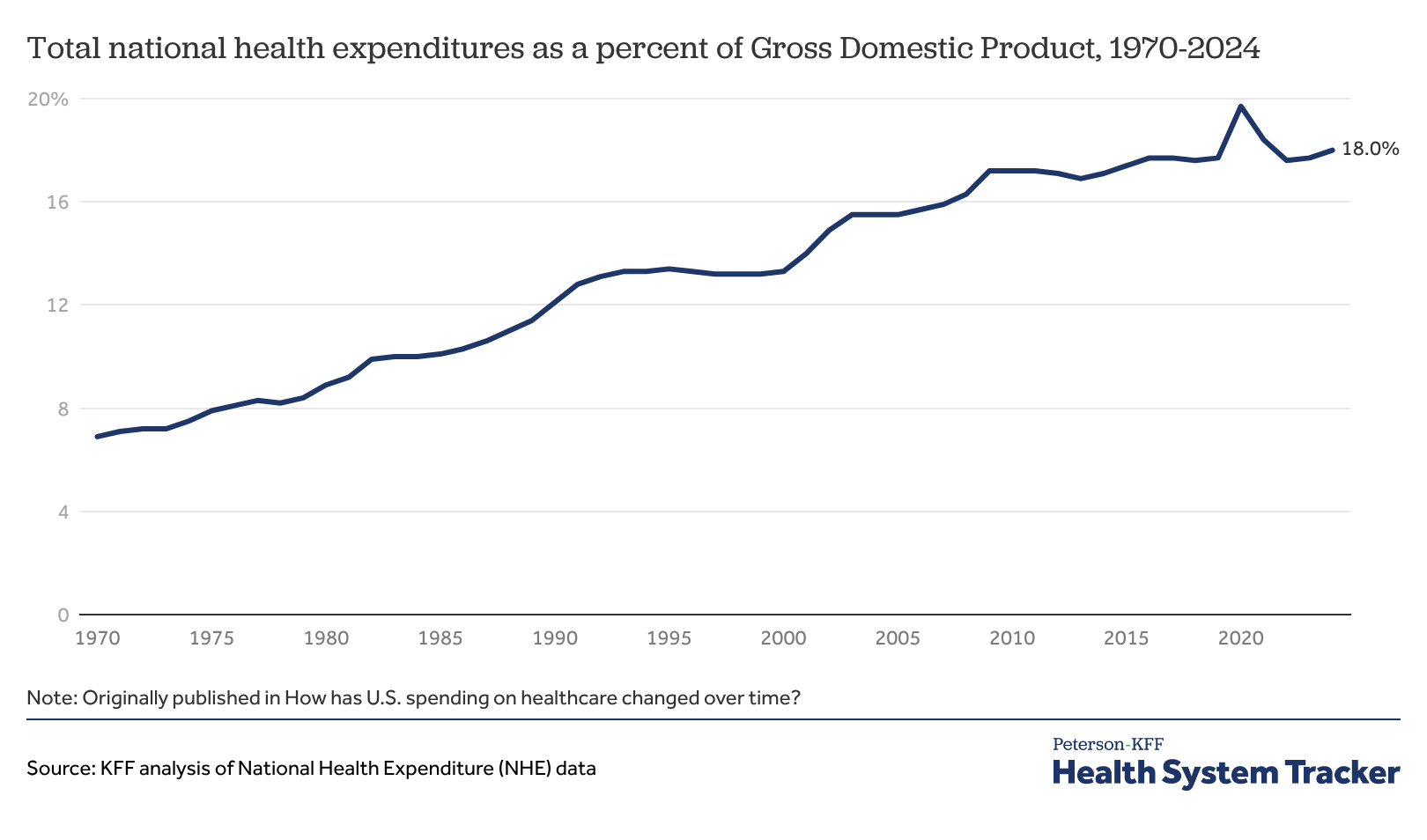
Hall and Jones suggest that the optimal health care share of US GDP could exceed 30% by mid-century. Health care spending is growing much slower than that would imply, having increased only modestly from ~16% in 2007 to ~18% now. But AI may yet vindicate this prediction. To justify substantial expenditure, a problem must have two properties. First, the solution must be highly valued. Second, the problem must be neither too easy nor too hard. Too easy, and we solve the problem at low cost; too hard, and the returns are too low to justify the spending. In Hall and Jones’s model, the elasticity of lifespan with respect to health spending needs to be high enough: if spending more doesn’t buy more years, it’s not worth it.
If AI moves radical life extension from “too hard” to “achievable at considerable expense”, we may be in the scenario they describe. This is a world where we devote a much larger share of income to health spending, because we so value the extra years that AI-driven medical advances can buy. How feasible are AI-driven increases in longevity? Some loose observations:
- Human mortality rates increase exponentially with age. The longevity gains to freezing or slowing this exponential mortality growth are enormous.
- If we are able to reduce mortality to the level of healthy 20-year-olds in developed countries, our life expectancies would be over 1,000 years.
- 70-year-olds can currently expect to live 15 more years on average, per the SSA’s actuarial life tables. If we could freeze their mortality rate at that of a 70-year-old, they could expect to live ~50 more years.
-
Slow aging is possible in animals, including at least one mammal. Naked mole-rats and some species of turtles and tortoises seem to experience no or minimal increase in mortality with age.
-
Slowing aging is possible in mammals. The National Institute on Aging’s Interventions Testing Program has found several interventions that robustly increase lifespan in mice. Rapamycin gives the strongest results so far, with ~10% increases in lifespan.
- AI seems well-suited to making progress on “messy” biological problems, characterized by high-dimensional complexity and no elegant unifying laws. Aging may be even messier than protein-folding, and harder to frame as a supervised learning problem. But the success of AlphaFold gives some hope that problems of this kind may prove tractable after all.
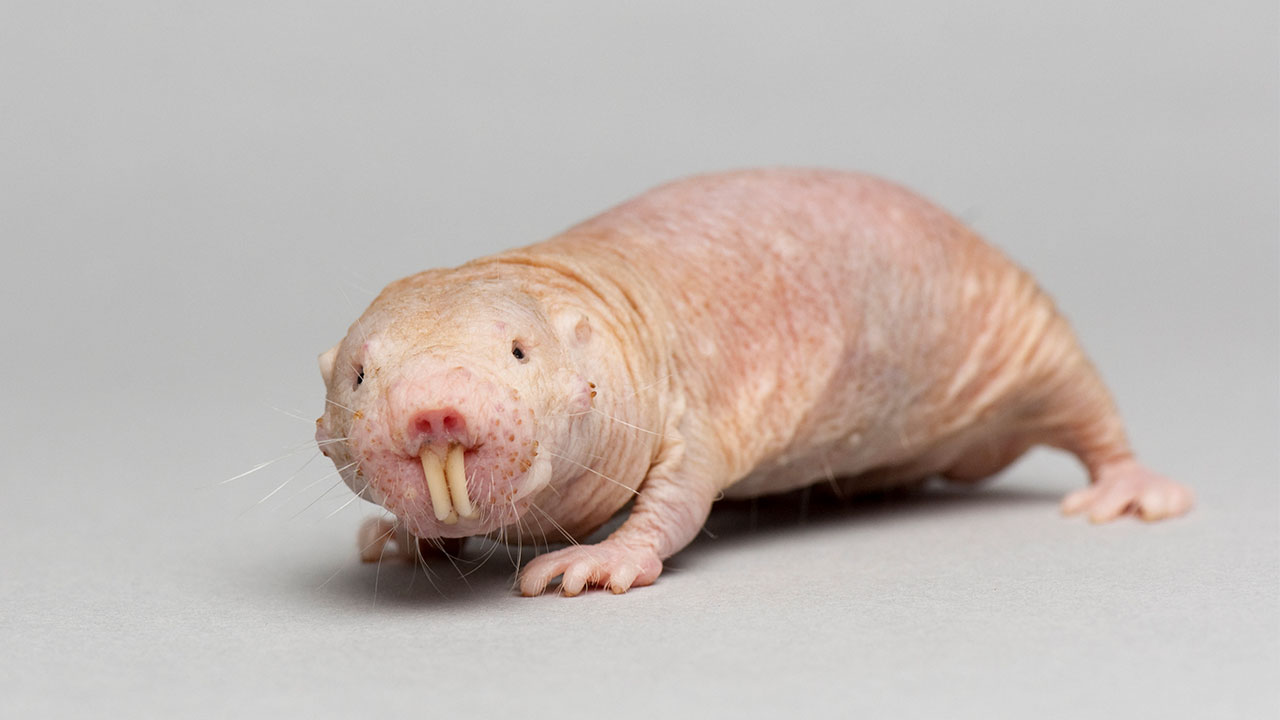
This will not be cheap. We are far from knowing how to make humans age like naked mole-rats, and there will be vast biological, experimental, and regulatory challenges along the way. So longevity is the right shape of problem to attract an increasing share of spending. Life extension is highly valued, and AI may make it just about tractable with great investment. If AI can bend our mortality curves to look a bit more like those of other mammals but only at considerable expense, we might end up living longer and healthier lives, at the cost of a large and growing fraction of GDP.